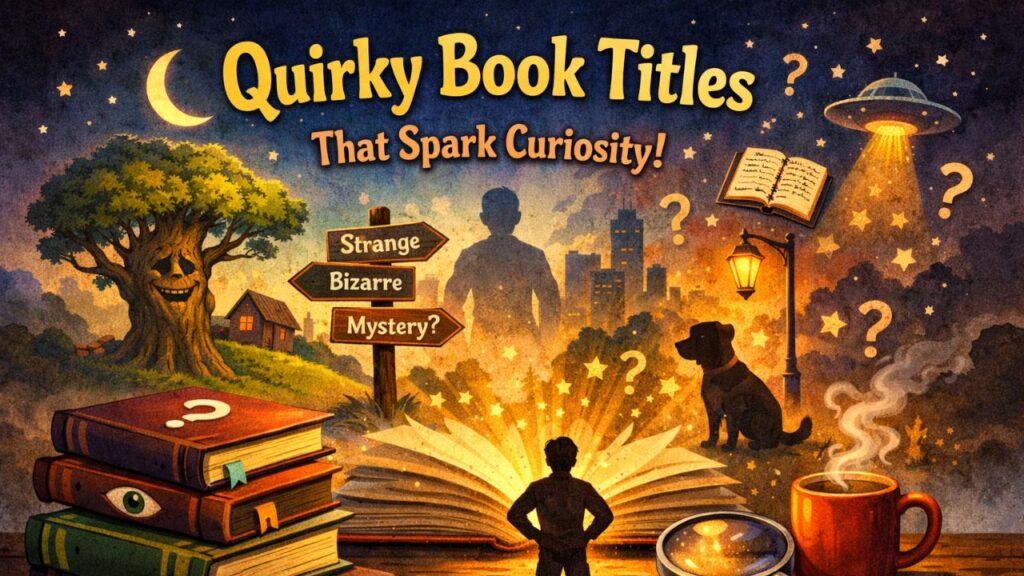
Some book titles are more than just labels—they are invitations. They can stop a reader mid-scroll, make them pause, and spark curiosity even before the first page is turned. A quirky or unusual title can immediately grab attention and suggest that the story inside is unique, unexpected, or full of surprises. These titles hint at playful ideas, deep thoughts, or unusual storytelling, making readers want to explore more.
The power of a book title lies in its ability to convey emotion, mystery, or humor in just a few words. A title can set the tone for the entire book and shape the expectations of its readers. Some titles are so strange or creative that they leave a lasting impression, making people remember the book long after they have seen it. Curiosity is a strong motivator, and a clever title can trigger it instantly.
In this article, we explore six book titles that are quirky, thought-provoking, and unforgettable. Each title is unique in its own way, and each encourages the reader to imagine the story behind the words. These titles show how a few simple words can spark curiosity, create emotion, and invite readers into a world they may not have expected.
Talks with Trees – Leslie Cabarga
“Talks with Trees” is a title that immediately grabs attention because it is playful, unusual, and intriguing. It suggests the impossible: having conversations with trees. This imaginative idea makes readers curious about what the book contains. Leslie Cabarga uses this book to explore nature in a creative way, giving plants personalities and voices.
The title encourages readers to rethink the natural world and notice details they may usually overlook. It creates a sense of wonder and invites reflection on how humans relate to the environment. The curiosity sparked by the title prepares the reader for an experience that is both whimsical and thoughtful. This book proves that even nature, when given a voice, can teach us lessons and inspire new ways of thinking.
I Want to Die but I Want to Eat Tteokbokki – Baek Se-hee
This title is impossible to ignore. It is raw, honest, and surprisingly relatable. The combination of despair and humor, vulnerability and warmth, immediately captures attention. By mentioning a specific food, the title makes the emotion feel grounded and human. It tells readers that the story is about real feelings, everyday struggles, and small joys that coexist with challenges.
The title sparks curiosity because it is paradoxical—how can someone feel both extreme sadness and simple pleasure at the same time? It draws readers into the author’s inner world, making them eager to understand how ordinary moments interact with emotional experiences. This title demonstrates that even difficult topics can be approached with honesty, relatability, and even humor, which encourages readers to explore the book further.
It – Stephen King
Stephen King’s “It” is a perfect example of simplicity and ambiguity creating maximum curiosity. The title is minimal—just a single word—but it leaves an enormous space for imagination. The definite article “It” makes readers immediately ask: What is “It”? The mystery begins before the book is even opened, making the title haunting and powerful.
This one-word title also creates a sense of universality. “It” could be anything—fear, evil, or an unknown force—allowing the reader’s mind to fill in the blanks. The title sets the tone for a chilling and suspenseful story, showing how minimalism can be as compelling as elaborate phrasing. Its simplicity makes it memorable and ensures that readers will remember it long after encountering it.
The Dream of a Ridiculous Man – Fyodor Dostoevsky
“The Dream of a Ridiculous Man” is strange, philosophical, and intriguing. The title combines words that seem contradictory at first. A “dream” hints at imagination or inner reflection, while “ridiculous” surprises the reader and challenges their expectations. This unique combination makes readers curious about the story and its deeper meaning.
The title promises an exploration of ideas that are both profound and unconventional. It invites readers to reflect on human nature, morality, and personal transformation. The word “ridiculous” also creates a sense of humility and relatability, suggesting that even someone seemingly foolish can reveal truths about life. This title demonstrates how creativity and philosophical depth can coexist in a few carefully chosen words.
The Boy Who Was Raised as a Dog – Dr. Bruce D. Perry (with Maia Szalavitz)
This title is shocking and unforgettable. It immediately makes the reader ask questions: How was the boy raised as a dog? What happened to him? The title promises a story that is unusual, intense, and emotional. It signals that the book deals with real-life experiences, trauma, and human psychology.
The curiosity generated by this title is powerful because it hints at survival, resilience, and the impact of extreme circumstances on human development. Readers are drawn in to learn about the challenges faced by the boy and the lessons that can be learned from his story. The title also suggests that the book will be emotionally moving, making it impossible to ignore.
The Curious Incident of the Dog in the Night-Time – Mark Haddon
This title feels like the beginning of a mystery. It is long, detailed, and unusual, which immediately sets it apart from more conventional titles. Words like “Curious Incident” and “Night-Time” create suspense, hinting at both investigation and an unusual perspective on life. The title alone makes readers want to know what happened, why it is curious, and how the story will unfold.
The book itself is told from the perspective of a young boy with a unique way of seeing the world. The title reflects both the investigative nature of the story and the unconventional approach to storytelling. It sparks curiosity not just about the plot, but also about the character’s mind, thoughts, and emotions. This title shows how specificity and detail can create intrigue and anticipation in readers.
Final Thoughts
Quirky book titles do more than name a story—they open doors to new experiences. They capture attention, provoke questions, and hint at what makes a book special. From playful conversations with trees to shocking real-life stories, these six titles demonstrate the power of a few well-chosen words.
A good title can stay in memory, spark curiosity, and make a reader feel something even before the first page. These books prove that unusual, thoughtful, or surprising titles can be just as important as the story inside, inviting readers to explore, reflect, and enjoy the journey that awaits.