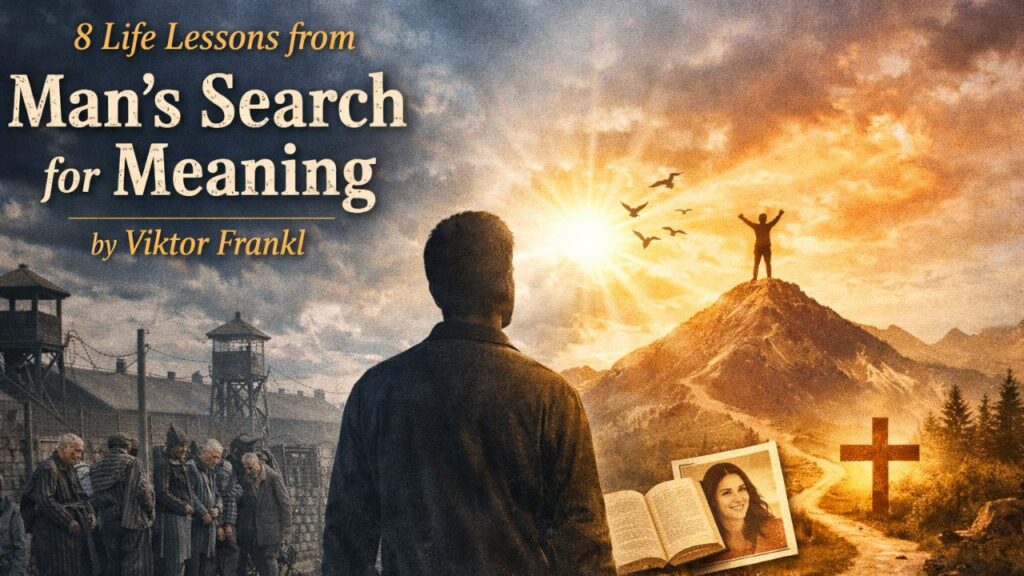
Human life becomes clearer when people understand their purpose. When we know why we live, difficulties feel lighter and strength feels closer. Viktor Frankl’s book Man’s Search for Meaning beautifully explains how meaning gives direction, courage, and emotional power to the human spirit.
This book is built on Frankl’s painful yet powerful experience in Nazi concentration camps. Even in a place filled with fear, hunger, cruelty, and uncertainty, he discovered that inner purpose can keep a person emotionally alive. His reflections show how hope and meaning can survive even when everything else is taken away.
Through his life story and his theory called logotherapy, Frankl explains many lessons about courage, responsibility, love, and attitude. These lessons are not only for people facing extreme pain but for anyone who wants clarity, strength, and purpose in life.
Meaning Gives Strength to Life
Frankl explains that people can face great pain when they have meaning in life. Meaning does not always come from success or comfort. It can come from love, dreams, work, family, faith, or even a responsibility that still needs to be fulfilled. When a person knows their life has value, they feel stronger, more hopeful, and more willing to survive difficult times.
Suffering Can Help Us Grow
Frankl teaches that suffering is not always avoidable, but it can shape us in meaningful ways. Instead of asking why we suffer, we can ask what we can learn from it. Pain may test us, but it also builds strength, patience, understanding, and emotional depth. Suffering does not always destroy life; sometimes it helps develop a wiser and stronger version of ourselves.
We Always Have the Power to Choose Our Attitude
Even in the worst situations, one freedom always remains: the freedom to choose our attitude. Frankl shows that while we cannot control everything that happens, we can control how we think, react, and behave. This lesson reminds us that our inner world does not have to break just because our outer world is suffering. Our attitude can protect our dignity and peace.
Responsibility Gives Meaning to Life
According to Frankl, life becomes meaningful when we take responsibility. Life is not only about asking what we want from it; it is also about what life expects from us. Responsibility toward loved ones, dreams, society, and ourselves gives direction and purpose. When we act with responsibility, life feels more focused, stable, and meaningful.
Love Gives Hope and Emotional Strength
Frankl highlights the deep power of love. Thinking about loved ones gave him strength in moments of weakness and fear. Love reminds people that they are important and that someone depends on them or cares for them. Love is not only emotional; it is also a source of courage, hope, and emotional survival.
Goals Help Us Survive Difficult Times
Frankl observed that people who had something to look forward to were mentally stronger in the camps. A goal creates hope and keeps the mind alive. When we know there is something ahead—an unfinished dream, a responsibility, or a person waiting—life feels worth fighting for. Goals give direction and protect us from emotional emptiness.
Life Has Meaning in Every Situation
Frankl explains that meaning exists in three important areas: through what we do, through what we love, and through how we face suffering. Meaning is not only found in happy or successful moments. It can also exist in loss, hard work, pain, and struggle when we face them with courage and understanding. Every situation can carry purpose if we look for it.
The Human Spirit Is Stronger Than Circumstances
The greatest lesson from Frankl’s story is the strength of the human spirit. Even in places designed to break hope, many people still showed kindness, faith, courage, humor, and emotional power. This shows that inner strength can rise higher than fear and cruelty. True strength comes from the soul, not just from the body.