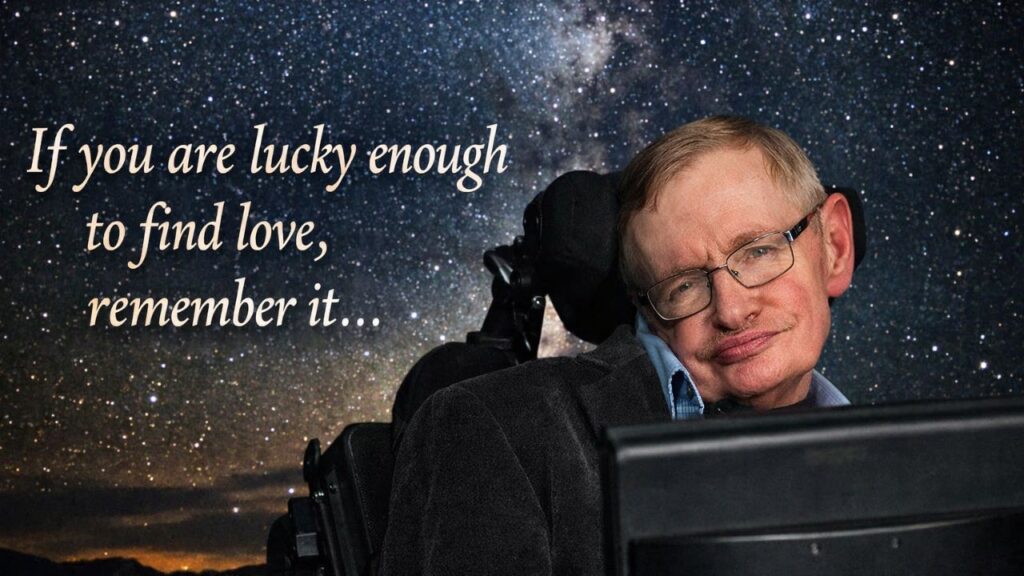
Love is usually spoken of as something emotional and poetic, but in Stephen Hawking’s life it was something real, grounding, and deeply human. Coming from a world-famous scientist known for his work on black holes, space, and time, this quote feels powerful because it comes from experience, not theory. Hawking knew hardship, fear, and uncertainty, so when he spoke about love, it came from a place of truth.
He understood that love is not guaranteed. Not everyone finds it, and those who do sometimes forget its value. His words gently remind us that love is something rare. It should not be ignored, taken for granted, or treated carelessly.
This quote teaches us that love is not only a feeling; it is also responsibility, gratitude, and commitment. It is something we must hold, protect, and respect when life becomes difficult. That is what gives the quote so much emotional strength.
Understanding Stephen Hawking’s Powerful Message
A Simple Line with Deep Meaning
At first read, Hawking’s line sounds soft and emotional, but it carries deep wisdom. Love is not just romance. It can be family love, friendship, companionship, or emotional support. When Hawking says “if you are lucky enough,” he reminds us that love is a blessing, not a guarantee. Many people go through life feeling lonely or misunderstood, so if love finds us, we should recognize its value.
Why He Spoke About Love So Strongly
Stephen Hawking faced one of the toughest challenges any person could live with. Diagnosed with ALS at a young age, doctors once believed he had only a few years to live. Yet during this dark phase, love gave him strength. It helped him keep hope, continue his studies, and build a meaningful life. Love was not just comfort—it helped him survive emotionally.
Love as Stability in Uncertain Times
Hawking’s life was full of uncertainty. His health was fragile, communication became difficult, and his body slowly weakened. But love provided emotional security. It gave him a reason to stay positive, to work harder, and to remain connected to life. Through this, he understood how powerful love truly is.
Love as Support, Strength, and Purpose
Love Gives Emotional Courage
Love has the power to lift a person in their weakest moments. When someone stands beside you, believes in you, and cares for you, life feels less heavy. Hawking’s message reflects this emotional courage. Love helped him face fear, illness, and limitations without losing hope.
Love Reminds Us We Are Human
Even though Hawking explored complex theories of space and time, he never forgot human emotions. His quote reminds us that beyond success, achievements, and knowledge, human connection matters the most. Love keeps people grounded. It brings warmth to life, no matter how brilliant or difficult that life may be.
Love Is Not Meant to Be Wasted
The final part of the quote—“don’t throw it away”—is a gentle warning. People sometimes ignore love because of ego, pride, anger, or carelessness. Hawking reminds us to be aware of its value. If you find someone who truly cares, respect that bond. Protect it, nurture it, and do not lose it over temporary problems.
Lessons This Quote Teaches Us
Be Grateful When Love Finds You
Love is not luck alone; it is also effort, patience, and understanding. Being grateful makes relationships stronger. When we don’t take love for granted, it grows.
Learn to Value People Who Care
This quote encourages us to respect relationships. Appreciate those who support you, stand by you, and help you become better. Such people do not come often in life.
Remember That Love Needs Care
Love stays strong only when we give attention, honesty, and kindness. Hawking’s words remind us that love requires effort, not neglect.
Why This Quote Still Matters Today
In a fast world where people rush through relationships and often treat emotions as temporary, Stephen Hawking’s words feel even more important. They remind us to slow down and understand the importance of meaningful connection. Technology, success, and achievements matter, but love gives life warmth, hope, and emotional balance.