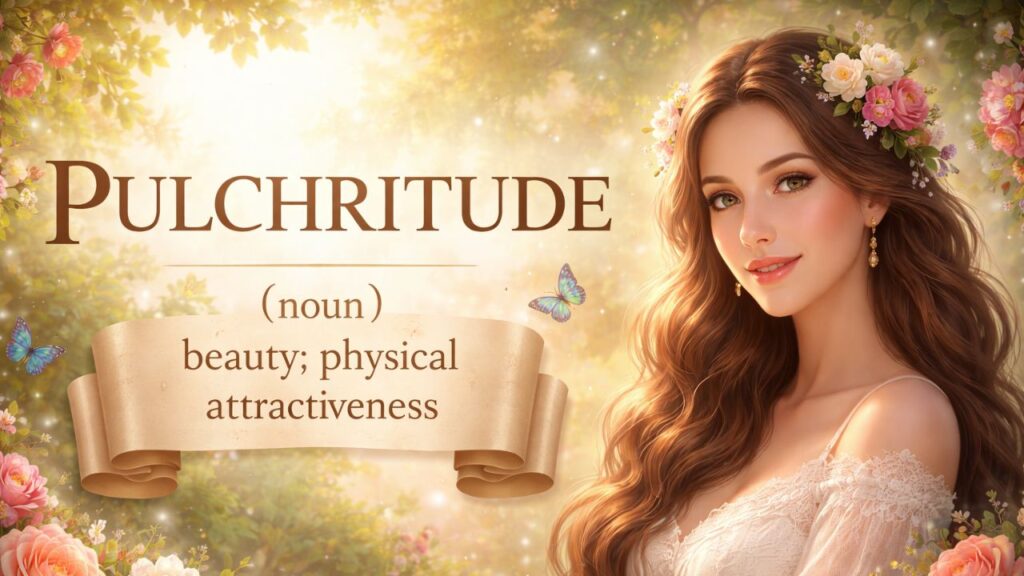
The English language is full of surprises, and sometimes the most beautiful meanings are hidden behind unusual or heavy-sounding words. “Pulchritude” is one of those words that at first may sound awkward but actually carries a lovely meaning.
Many people are surprised when they learn that this word, which may seem harsh to the ear, actually speaks about beauty and charm. It reminds us that language is not always what it looks like on the surface.
Though it is rarely heard in normal daily speech, pulchritude holds a special place in literature and formal writing, where it continues to express beauty in a rich, classical way.
What Does “Pulchritude” Mean?
Pulchritude refers to physical beauty or attractiveness. It describes something or someone that is pleasing to the eye, charming in appearance, or visually delightful. While it is most commonly used to describe outward beauty, it can also express a sense of aesthetic elegance seen in nature, art, or scenery. Even though the word sounds complex, its meaning is simple—it celebrates beauty in a graceful and refined manner.
Origin and History of the Word
The word pulchritude has deep roots in classical language. It comes from the Latin word pulchritūdō, meaning “beauty” or “fairness,” which itself comes from pulcher, meaning “beautiful.” From Latin, it passed into Middle French and finally entered English in the 15th century.
Over time, everyday words like “beauty” and “pretty” became more common in normal speech. As a result, pulchritude remained mostly in formal, literary, and academic language. Today, it is often found in poetry, scholarly writing, or refined descriptions where the writer wants to add elegance and depth to the expression of beauty.
Meaning in Simple Terms
In easy language, pulchritude simply means beauty that pleases the eyes. It can describe a person, a landscape, an artwork, or any sight that naturally attracts admiration. Although the sound of the word may not feel gentle, its meaning carries warmth, charm, and appreciation for visual appeal.
Synonyms and Antonyms
- Synonyms: beauty, loveliness, attractiveness, comeliness, grace
- Antonyms: ugliness, plainness, homeliness, unsightliness
These words help show how pulchritude connects to elegance and visual charm, while its antonyms highlight the opposite sense of dull or unattractive appearance.
Usage in Sentences
- The painter captured the natural pulchritude of the countryside with remarkable skill.
- Her confidence enhanced her pulchritude, making her presence truly captivating.
- Poets often struggle to describe the pulchritude of a glowing sunset.
Why This Word Matters
Pulchritude is a great example of how language can surprise us. It teaches that sound does not always match meaning and that words can carry history, depth, and hidden beauty. Learning such words helps us speak more thoughtfully, appreciate language more deeply, and understand how meaning travels through time.
In the end, pulchritude reminds us that beauty is not only something we see—it is also something we discover through curiosity, understanding, and appreciation of language itself.